Friday, June 27, 2008

The application of pre-paid cash card for consumers

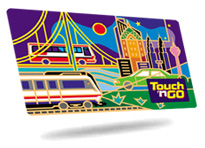
1. Touch-n-Go
Touch ‘n Go (TNG) card is a multipurpose pre-paid card which can be used in public transportation around Selangor and all highway in Malaysia. However, applications of Touch-n-Go are expended toward the retail purchases. Such as fast food industry and parking fees. Recently, TNG facilities at both the KL International Airport (KLIA) and Low-Cost Carrier Terminal (LCCT) since February this year. Consumer just load in money and use it to pay the fee, and prepaid card not like credit card is using the future money. It is very convenience to us.

2. Octopus

Octopus is one of the most successful " prepaid card" system. It is started from a transit payment system, and it has become a widely used electronic cash system. In Hong Kong, most of the people are using Octopus pre-paid card in different services including public transportation services, apparel stores, bakeries, car parks, cinemas, convenience stores, fast food chains, household stores, leisure facilities, personal care stores, photo finishing stores, photocopiers, supermarkets, and vending machines. From year 2006, ShenZhen and Macau also can use Octopus card.


3. Ezlink
Same as Touch-n-Go and Octopus, Ezlink is pre-paid card in Singapore. It can be used in different sector service including food & beverage, convenience shops, gaming, government service, health, shopping & retail, tertiary institutions, schools, private bus service and so on.


4. Oyster Card
Oyster card is known as " Pay as you go" cards. It is fully valid on London transport services. Started from 2007, Oyster card also can be used to purchase goods and services.

n
n


Not only had these four prepaid card, others country also got prepaid card distributed. For example, Taiwan got EasyCard, Australia got SmartRider, Tcard, and myki.These four prepaid card got similiar features is to link to the public transport system. Besides that, we need to keep it safety. This is because prepaid not like credit card or debit card need to sign the receipt, so in order to protect ourselves' money, we need to be careful at all.

Thursday, June 26, 2008

Review on a post from My E-commerce Blog - Touch n Go Card

There is a good news for all Touch n Go cardholders, we can use Touch n Go card to buy fast food now! From: My E-commerce Blog


Most of the residents in Kuala Lumpur have their Touch n Go card. As we know, Kuala Lumpur is a big city of Malaysia with high population. It may create a problem that we are not willing to meet, traffic jam. By using Touch n Go card, it can reduce the time in queuing for paying toll fee. Besides that, it is useful in taking LRT/KTM. Now we don’t need to buy a ticket and just put your Touch n Go card on the machine. After a sound of “Beep!” then you can continue your journey. There are so many benefit of Touch n Go card, thus I also own a Touch n Go card now.

However, I found some problems after using Touch n Go card. It is not useful in other places except the area of Klang Valley. My father who staying in Johor now has Touch n Go card too. He seldom uses it unless he wants to pay toll fees. Besides that, I cannot use my card in some places due to machine problems. There are few customer service centers besides the areas of KL.

Touch n Go card is a good card for us but it still needs to improve its quality and usefulness. Therefore it is good news that it wants to expand their applications and services towards the retail purchase. It is good strategy to attract more people to be cardholders of Touch n Go card.

For further details or latest news of Touch n Go card, go to
http://www.touchngo.com.my/
My Ecommerce Blog - http://ecommerze.blogspot.com/

Tuesday, June 24, 2008

Electronic Currency-DigiCash


DigiCash Inc. was a pioneering electronic currency corporation founded by David Chaum in 1990. DigiCash transactions were unique in that were anonymous due to number cryptographic protocols developed by its founder. DigiCash declared bankruptcy in 1998, and subsequently sold its assets to ecash Techologies, another digital currency company which was acquired by InfoSpace on Feb, 19, 2002.

There were some reasons I searching on the internet DigiCash failed:

DigiCash is the techno-determinist view, more fashionable version according to which technology is developing according to some inherent, independent route. Thus, DigiCash was too good a technology, it did not wish it to be used by certain people and they refused, different to the requests of the banks, to allow accountless operation. This meant that to use DigiCash effectively, everyone has to have an account with a DigiCash supporting bank. This disadvantaged the customers of the privacy DigiCash was supposed to provide and created simulated to people who wished to use DigiCash.

Furthermore, DigiCash was too good a technology, too high-tech and over-developed. When it encountered real on-line behaviour this made it impossible to change the technology to reflect those different interests, not because it wasn't good enough, but because it was so well constructed that nobody dared to use with it.

Many of the major new technologies have undergone series of deep changes under the influence of multiple non-technical and just think of history. But, the micro-payments are being promoted by IBM and Digital/Compaq, companies that can also mobilize very significant resources. By the time when these technologies appear on the 'market' most of the major decisions will already been made.

Monday, June 23, 2008

Phishing: Examples and its prevention methods

Phishing is act of sending an e-mail to a user untruly claiming to be an established lawful enterprise in an attempt to scam the user private information that will be used for identity theft. The e-mail directs the user to visit a Web site where they are asked to update personal information, such as passwords and credit card, social security, and bank account numbers, that the lawful organization already has. However, the web site is false and set up only to steal the user’s information.


Phishing examples: PayPal

An example of a phishing e-mail targeted at PayPal users.

PayPal phishing attempt can be notice by the spelling mistakes in the e-mail and IP address in the link which is the visible in the tooltip under yellow box. Another clue is lack of personal greeting, even though the company personal details would not be security of legality. Other signs are misspellings of simple words and threat of consequences such as account suspension if recipient fails to fulfill the message requests.

Preventions:

Social responses

By training people to recognize phishing attempts and to deal with them such as in education where training provides directs feedback. To avoid phishing attempts, people can slightly modify their browsing habits such as when contacted about an account needing to verified, it is wise able to contact the company. Almost all legal e-mail messages from companies to their customers contain an item of information that is not readily available to phishes. For example, PayPal always address their customers by their username in e-mails.

Website forgery

Some phishing scams uses JavaScript instructions to change the address bar. This can be done either placing a picture of a legitimate URL over the address bar or by closing original address bar and open new one with legitimate URL.

Besides, attacker can use flaws in trusted website’s own scripts. This type of attack is known as cross-site scripting. They direct user to sign in at their bank or services own web page where whole from web address to security certificates appears correct.

Augmenting password logins

Furthermore, to prevent phishing transaction numbers (TANs) is to combine each TAN with “lock number”. The bank server sends the lock number as a challenge, and user provides matching TAN as response. Server selects key-lock pair randomly from the list to prevent obtains two repeated TANs. Lock number are not sequential, so phishers can only guess correct numbers.

Saturday, June 21, 2008

Threat of Online Security:How Safe is our data?


Many people, known as Hackers, want nothing more than to break through ours computer security and expose the sensitive information. With widespread use of personal computers, the pool for "hackers" to target grows every day. We hear about worldwide computer Virus, Trojan, or Worm wreaking havoc on machines across the globe.
For Examlple:
The mail attacker - David L. Smith
Smith was the writer of the Melissa Worm, which in 1999 became the first major e-mail macro virus. He deliberately posted an infected document to an alt.sex usenet newsgroup from a stolen
AOL address. The worm, believed to be named after a stripper he knew in Florida, forwarded itself to the first 50 accessible addresses in Microsoft Outlook address books.
Companies like Microsoft,
Intel, Lockheed Martin and Lucent Technologies were believed to have had to shut down their email gateways due to the large amount of email the virus was generating. In his federal plea, he acknowledged that he cost caused more than $80 million to North American business, and was sentenced to 20 months in jail.
The Canadian teen – MafiaBoy
MafiaBoy was the alias for a 15-year old Canadian boy who launched a denial-of-service attack that crippled sites such as
Amazon, Dell, eBay eBay and Yahoo in 2000, which led to an estimated $1.7 billion cost in damages. The affected sites were bombarded with thousands of simultaneous messages, preventing users from accessing for up to five hours.
Although by Canadian law his name was not released by authorities, media outlets later revealed that his name was Mike Calce. Courts sentenced him to eight months custody in a youth detention centre.
There have have many cases that we can found in internet. How our safe is our data?Even though the large international companies have compactness security system but they still the threats of online security problem there. Thus, as we know that how safety our data.........

Protect our personal/financial data now

How many day you can live without computer or internet? Nowadays, computer and internet have already become a necessary part of our life. It seems that everything relies on computer and internet now such as communication, entertainment and business transactions. Therefore, a lot of our personal data (passwords, records or confidential information) are stored either on our own computer or on someone else’s system. Nobody can guarantee that these data can be stored safely as there are many problem of cyber security now. Have you heard the news about credit card numbers or personal data was stolen by outsider? If you don’t want to be one of the victims of these cases, here are some steps we found from website that can help us to protect our data:

1. Use a strong password to protect access to your data.
2. Use and maintain anti-virus software/spyware and a firewall.
3. Regularly scan your computer and keep software up to date.
4. Avoid unused software programs
5. Dispose of sensitive information properly.

Want to know more? Go to HERE for further information.


Besides above steps, we can provide some tips that based on our experiences. Set a new password regularly for accessing your own computer. Some people like to save their password in computer such as msn password It create a risk that other people can sign in your msn and chat with your friends. Next, do not open or reply the unknown email, website or any online request. These requests might contain some virus/ Trojans that disclose your personal data to someone else. In addition, do not tell any password (e.g. Credit card password) to your friends through internet.

This is our tips, how about you?
Do you have any good tips in protecting our personal/financial data? Tell us ~

Few months ago, there is a big news which happened in Hong Kong entertainment industry. A famous celebrity, Edison Chen’s personal data was stolen by someone else and uploaded it to internet. According to the news, Edison Chen saved his personal data in his computer. One day his computer had some problems and he sent it to the computer shop for repairing. The computer shop’s worker found those data and copied it and uploaded to internet. There is a problem here, how we can protect our personal data when we want to repaired our computer? Our answer is:

DO NOT SAVE ANY CONFIDENTIAL DATA IN OUR COMPUTER!
(^^)

Friday, June 20, 2008

History and Evoluation of E-commerce


The origin of commerce by exchanging goods, now commerce is a basic activity of goods trading and buying in everyday life. Entering into the electronic era, the way individuals and organizations do business and undertake commercial transactions have been changed.The emergence of electronic commerce started in the early 1970s with the earliest is technology electronic interchange (EDI) was introduced.
During the 1990s, the
Internet was opened for commercial use; it was also the period that users started to participate in World Wide Web (WWW), and the phenomenon of rapid personal computer (PCs) usage growth. Due to the rapid expansion of the WWW network; e-commerce software; and the peer business competitions, large number of dot-coms and Internet starts-ups appeared. Integrated with the commercialization of the Internet, Web invention, and PC networks these three important factors made electronic commerce possible and successful.
Today the largest electronic commerce is Business-to-Business (B2B). Businesses involved in B2B sell their goods to other businesses.Other varieties growing today include Consumer-to-Consumer (C2C) where consumers sell to each other, for example through auction sites. Peer-to-Peer (P2P) is another form of e-commerce that allows users to share resources and files directly.
History of ecommerce is a history of a new, virtual world which is evolving according to the customer advantage. All the tasks, letters, messages and data transferred within a flick of a second at any place no matter how far or how near. This all was impossible even for a thought or a dream, for things to be like that just a few years ago. It is a world which we are all building together brick by brick, laying a secure foundation for the future generations.